
When we think about dog training, we often think about teaching our dogs to sit, stay, come when called and walk nicely on the lead.
These are all useful skills. But what if our goal could be bigger than simply teaching our dogs to follow instructions?
What if, instead of constantly telling our dogs what to do, we could help them learn to make good decisions for themselves?
Imagine being able to open your front door without your dog rushing outside. Or enjoying a walk where your dog regularly checks in with you, even when there’s something interesting to investigate. Perhaps your dog can settle while you work, come away from a tempting cat or choose to move away from something they’re uncomfortable with.
These aren’t just behaviours we want our dogs to perform when we ask. They’re skills we can build through thoughtful training, reinforcement and experience.
The aim is to teach dogs how to navigate the world successfully, rather than relying on us to manage every single decision they make.
Beyond simply getting the behaviour we want
It’s easy to focus on the end result when training our dogs.
We want them to stop barking, stop pulling, leave things alone or come back when called. Understandably, we want everyday life to feel easier and safer.
But it’s worth thinking about how we achieve those results, and what our dogs are learning along the way.
A dog might stop doing something because they’ve learned an alternative behaviour that’s rewarding and worthwhile. They might also stop because they’ve learned that doing it results in something unpleasant.
From the outside, both dogs might appear to be behaving in the same way. However, the behaviour alone doesn’t tell us how the dog feels or what they’ve learned about the situation.
For example, a dog who stops barking at other dogs after being corrected may still feel worried or uncomfortable around them. The barking has changed, but the underlying emotion may not have.
This is why I focus on reward-based training that helps dogs develop useful skills, builds positive associations and gives them opportunities to learn what works.
We aren’t aiming for perfect obedience at any cost. We’re aiming to help dogs become more confident and capable, while building a relationship in which learning is worthwhile for both of us.
Teaching dogs to manage themselves
One of the things I love about reward-based training is that we’re not just teaching individual behaviours. We’re building habits that dogs can begin to offer without needing constant reminders.
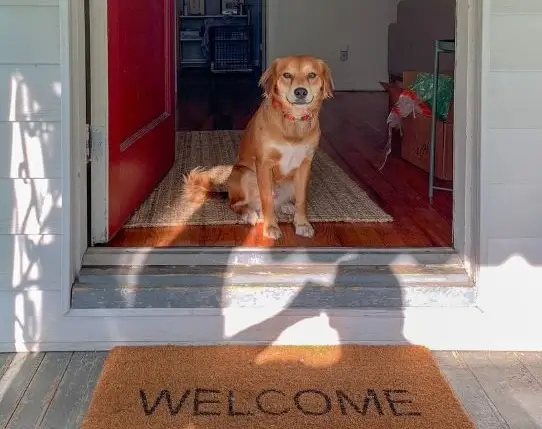
Consider teaching a dog to wait at an open doorway.
We could repeatedly intervene whenever they approach the door, or rely on correcting them if they try to go through it. This might interrupt the behaviour in the moment, but it leaves us needing to supervise and respond every time.
Alternatively, we can teach the dog that remaining behind the threshold is rewarding.
We start in easy situations, reinforce the behaviour we want and gradually build the skill as the dog becomes more successful. We can then practise in different contexts, while continuing to use sensible management to prevent accidental escapes.
Over time, waiting at the door can become a familiar behaviour that the dog offers without being asked every time.
The same principle applies to many everyday situations. We can reinforce dogs for checking in with us on walks, settling in a designated space, disengaging from distractions or choosing to move away when something feels uncomfortable.
The more we build these skills, the less we need to rely on constantly directing every movement. Once habits kick in, they are hard to change and we can use this to our advantage by actively encouraging and building good habits.
Of course, dogs aren’t robots, and no behaviour is guaranteed in every situation. Excitement, stress, the environment and changes in health can all affect how well a dog copes.
Management remains important, especially where safety is concerned. But our long-term aim is to give dogs a strong foundation of skills they can use in everyday life.
Why choice matters
Choice is an important part of a dog’s quality of life.
Dogs need opportunities to sniff, explore, rest, interact with their environment and move away from situations they’re uncomfortable with. They benefit from having some control over what happens to them, rather than having every interaction dictated by the people around them.
That doesn’t mean allowing dogs to do whatever they want, regardless of safety or other people’s needs.
Responsible dog ownership involves boundaries, management and teaching appropriate behaviours. But within those boundaries, we can give our dogs opportunities to make decisions and discover that their choices can have positive outcomes.
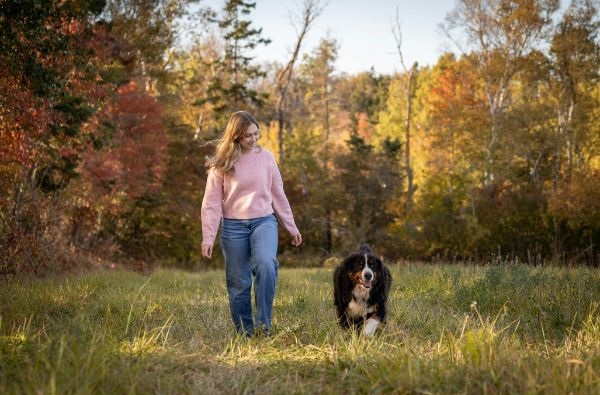
For example, on a walk, we might allow our dog to choose which patch of grass to investigate, provided it’s safe. We can reward them for checking in with us before moving on. If they notice another dog and choose to turn back towards us, we can reinforce that decision.
These moments might seem small, but they help build a history of successful choices.
Choice also means respecting when a dog needs space. If they move away from an interaction, we don’t always need to encourage them back into it. Sometimes, allowing them to disengage is exactly the support they need.
When dogs learn that they can communicate, make choices and rely on us to help them, we create opportunities for confidence and trust to grow.
What about self-regulation?
Self-regulation is the ability to manage responses to what’s happening around us. In dogs, this can involve gradually developing the ability to settle, cope with frustration, disengage from distractions and recover after excitement or stress.
It’s important to recognise that self-regulation isn’t something we can simply demand from a dog.
A puppy who struggles to settle, an adolescent who finds the world incredibly exciting or a dog who becomes overwhelmed around other dogs may not yet have the skills to cope with those situations.
Expecting them to simply behave, without teaching the necessary skills or considering their emotional state, isn’t likely to help.
Instead, we can create conditions that make success more achievable.
That might mean choosing quieter walking routes, providing appropriate enrichment, ensuring dogs get enough rest, increasing distance from distractions or practising settling in an environment where the dog can succeed.
We can then reinforce the behaviours we want to see and gradually build difficulty as the dog becomes more capable.
The goal isn’t to eliminate excitement, frustration or fear. These are normal emotional responses. It’s to help dogs develop ways of coping that are safe, appropriate and increasingly effective.
And sometimes, the best thing we can do is recognise that a situation is currently too difficult and give our dog more support.
Does this mean dogs should never be corrected?
Reward-based training doesn’t mean having no boundaries or allowing unsafe behaviour.
We still need to prevent dogs from running into roads, eating dangerous items, chasing livestock or putting themselves and others at risk. We use leads, barriers, gates, supervision and other management strategies to keep everyone safe.
We also teach behaviours that help dogs navigate those situations successfully.
The important distinction is between setting dogs up for success and relying on unpleasant consequences to suppress unwanted behaviour.
Aversive methods can stop a behaviour without resolving the underlying emotion or need. In some cases, they can increase fear or stress, and punishment may suppress warning signals that would otherwise help us recognise when a dog is uncomfortable. There are also welfare and aggression risks to consider, particularly to children.
Reward-based training isn’t a guarantee that a dog will never struggle, and it doesn’t mean every problem can be solved with a treat. Dogs are individuals, and their behaviour is influenced by their environment, health, emotional state and learning history.
But we can work towards teaching skills that are genuinely useful to the dog, while making learning a positive experience.
The aim isn’t simply to stop a dog doing the wrong thing. It’s to help them learn what to do instead, and make that behaviour worthwhile.
Building a stronger relationship through training
One of the most rewarding parts of this approach is the relationship it helps us develop with our dogs.
When training is built around reinforcement, communication and achievable challenges, learning becomes something we do together.
Our dogs have opportunities to succeed, discover what works and build confidence through experience. We learn to recognise when they need support, when to make things easier and when they’re ready for a new challenge.
That doesn’t mean every training session will be perfect. Dogs get distracted, struggle with new situations and have days when things are harder than usual.
But when we approach these moments with curiosity rather than frustration, we can use them to understand our dogs better and adapt what we’re asking of them.
We also become less reliant on constant intervention because we’re investing in skills and habits that can carry over into everyday life.
Good training isn’t just about having a dog who responds to cues. It’s about developing a dog who has the skills to make good choices, and a human who understands how to support them.
Start by understanding your dog
Before we can help our dogs make better choices, we need to understand what influences those choices.
Are they feeling safe? Have their needs been met? Are they comfortable with the situation? Is the environment too difficult, or are we expecting a skill they haven’t learned yet?
These are some of the questions I encourage owners to consider when thinking about their dogs’ behaviour.
If you’d like to explore this way of looking at behaviour, my guide, The Five Questions Every Dog Is Answering, is a great place to start. It encourages you to look beyond what your dog is doing and consider what their behaviour might be telling you.
If your dog’s behaviour has changed unexpectedly, remember that physical discomfort can also play a role. In my article, Could Pain Be Affecting Your Dog’s Behaviour?, I explore why it’s important to consider possible physical causes before assuming a problem is purely a training issue.
Understanding our dogs is the starting point. From there, we can build skills, confidence and habits that help them navigate the world more successfully.
Because the best training doesn’t just tell dogs what to do. It helps them learn how to make good choices for themselves.