
When our dogs display behaviour we find difficult, it’s natural to focus on what they’re doing and how we can change it.
Perhaps your dog has started barking and lunging at other dogs on walks. Maybe they’re becoming reluctant to go out, growling when someone approaches them while resting, or reacting differently to handling. You might have noticed that they’re less tolerant of things they previously seemed comfortable with.
It’s easy to assume that these are training issues. Sometimes they are, but what if there’s something else going on?
Pain and discomfort can have a significant impact on a dog’s behaviour, and sometimes a change in behaviour is one of the first signs that something isn’t right.
Understanding this can change how we approach our dogs, the expectations we place on them and the support we provide.
Behaviour doesn’t happen in isolation
Our dogs don’t behave in a vacuum. Their behaviour is influenced by their experiences, environment, emotional state, physical health and the things happening around them.
When a dog behaves in a way we find challenging, it’s worth looking beyond the behaviour itself and asking what might be contributing to it.
A dog who barks at another dog might be frightened, frustrated, uncomfortable or simply struggling to cope with the situation. A dog who growls when approached might be worried about losing something valuable, feeling vulnerable or experiencing pain when they move.
We can’t know the reason just by looking at the behaviour. Instead, we need to consider the context, look for patterns and investigate possible causes.
This is particularly important when a dog’s behaviour changes unexpectedly, becomes more intense or seems out of character.
How can pain affect a dog’s behaviour?
We often associate pain with obvious physical signs, such as limping, crying or avoiding putting weight on a leg. However, dogs don’t always show pain in ways that are easy to recognise.
They may continue walking, playing and engaging with their surroundings despite discomfort. Some dogs adapt their movements, while others become quieter or change their behaviour in more subtle ways.
Here are some changes worth paying attention to.
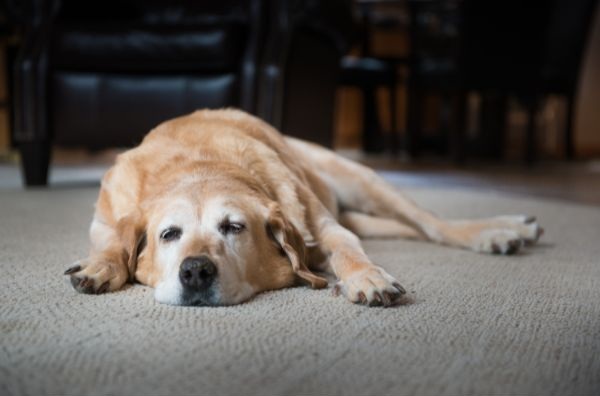
Increased reactivity towards other dogs or people
A dog experiencing pain may have less tolerance for situations they previously managed more comfortably.
For example, a dog who is uncomfortable moving or being bumped into might find close encounters with other dogs much harder. They may bark, growl or lunge to increase the distance between themselves and whatever is approaching.
This doesn’t necessarily mean pain is the cause of their reactivity. However, it’s one possibility worth considering, particularly if the behaviour is new or has become noticeably worse.
Growling or snapping during handling
A dog who begins growling when touched, brushed, lifted or approached while resting may be trying to communicate discomfort.
Perhaps being touched in a particular area hurts. Maybe changing position is uncomfortable, or they anticipate that an interaction will cause pain. When you anticipate something, your muscles tense. If there is soreness in the muscles, this will feel uncomfortable.
It’s important to take these changes seriously rather than assuming the dog is being difficult or needs to learn to tolerate the handling.
Growling is communication. Punishing it may suppress the warning without resolving the reason the dog feels uncomfortable.
Reluctance to walk, play or engage
Has your dog started lagging behind on walks, refusing certain routes, avoiding stairs or showing less interest in activities they previously enjoyed?
Perhaps they still get excited when you pick up the lead but seem reluctant once they’re outside. Or they want to play but disengage sooner than usual.
Changes like these can have several explanations, including physical discomfort. They deserve attention, especially when they persist or occur alongside other changes.
Changes at home
Pain can also influence how dogs behave in familiar surroundings.
A dog might become less tolerant of other pets, avoid resting in their usual places, struggle to settle, withdraw from family interactions or become more irritable when disturbed.
These changes can be particularly easy to overlook because they happen gradually. We may simply think our dog is getting older, becoming grumpy or developing a new habit.
While behaviour can change for many reasons, physical discomfort should be part of the picture we consider.
Why pain can be easy to miss
One of the difficulties with recognising pain is that dogs can be very good at adapting to it.
They might compensate for discomfort by changing how they move, avoid activities that make things worse or continue doing something enjoyable despite the pain.
They may also associate a particular situation with discomfort. For example, if meeting another dog has repeatedly resulted in painful jostling or uncomfortable movement, they may begin reacting earlier, even when the other dog is still some distance away.
Over time, the emotional response can become part of the problem in its own right. Even after the original physical issue has improved, the dog may still anticipate that the situation will be uncomfortable or threatening.
This is one reason why addressing a physical problem doesn’t always make an established behavioural difficulty disappear overnight.
It also highlights why we need to look at the whole picture rather than expecting one explanation or one intervention to resolve everything.
What should you do if you suspect pain?
If you notice a sudden change in your dog’s behaviour, or a gradual change that concerns you, arrange a veterinary assessment.
Your vet can help investigate possible physical causes and advise on appropriate treatment or further assessment.
It can be helpful to keep notes about what you’ve observed. Think about when the behaviour happens, what your dog is doing immediately beforehand, whether it varies with activity or rest, and whether you’ve noticed changes in their movement, appetite, sleep or willingness to engage.
Video footage of naturally occurring changes can also be useful, provided you don’t deliberately put your dog in a difficult or potentially painful situation to capture it. When trying to identify pain areas, it can be useful for your vet if you take videos of your dog moving naturally from the side and and front/back, how they sit and how they walk from different angles.
In the meantime, consider how you can make life easier for your dog.
That might mean reducing the intensity of walks, avoiding activities that appear uncomfortable, giving them space when resting, preventing unwanted handling or increasing distance from situations they find difficult.
Don’t force your dog through an activity simply because you want them to get used to it. If pain is involved, that may make the experience harder rather than helping them cope.
If a behavioural difficulty is already established, a suitably qualified reward-based trainer or behaviour professional can work alongside your vet to help you adapt your training and support your dog.
Why changing the behaviour isn’t always enough
When we’re faced with a behaviour we don’t like, it’s understandable to want it to stop.
However, suppressing a behaviour isn’t the same as resolving the underlying problem.
For example, a dog who stops barking at other dogs after being corrected may still feel worried or uncomfortable about those encounters. They might simply have learned that barking has unpleasant consequences.
This matters because the dog’s emotional experience hasn’t necessarily changed. In some cases, punishment can increase fear or stress, and suppressing warning signals can make it harder to recognise when a dog is struggling. Aversive methods also carry risks for welfare and aggression.
Reward-based training takes a different approach. We work to understand what’s influencing the behaviour, address relevant needs and teach skills that help the dog cope more successfully.
That doesn’t mean reward-based training can fix pain, or that every behavioural difficulty will disappear simply by offering treats. Physical health, environment, learning history and emotional state all matter.
The aim is not simply to make unwanted behaviour disappear. It’s to understand why the dog is struggling and help them feel and function better.
Looking at the bigger picture
This is one of the reasons I encourage owners to think about the questions their dogs might be answering through their behaviour.
Do they feel safe? Have their needs been met? Are they comfortable with what’s happening? Do they have the space and support they need?
When we consider these questions, we’re less likely to view behaviour as something that happens purely because a dog is being stubborn or disobedient.
Instead, we start to look at what might be influencing their choices and what we can change to help them.
Pain is just one possible factor, but it’s an important one. Sometimes the most useful first step isn’t teaching a new behaviour at all. It’s finding out whether something is making life harder for our dog.
If you’d like to explore this approach further, take a look at my guide, The Five Questions Every Dog Is Answering. It offers a useful starting point for thinking about what your dog might be communicating and how you can respond more effectively.
From understanding behaviour to building better habits
Understanding why a dog is struggling is the first step. Once we have considered their physical and emotional needs, we can look at how to help them navigate everyday situations with greater confidence.
But how do we move beyond constantly managing our dogs and towards teaching them skills they can use for themselves?
In my next article, Beyond Obedience: Teaching Your Dog to Make Good Choices, I’ll explore the importance of choice, self-regulation and reward-based training in helping dogs develop behaviours that last.
Because good training isn’t just about what our dogs do. It’s also about how we help them get there.